
A raspberry looks different in every language I speak
Four languages, four selves, one poem, and the strange work of finding why they don't translate

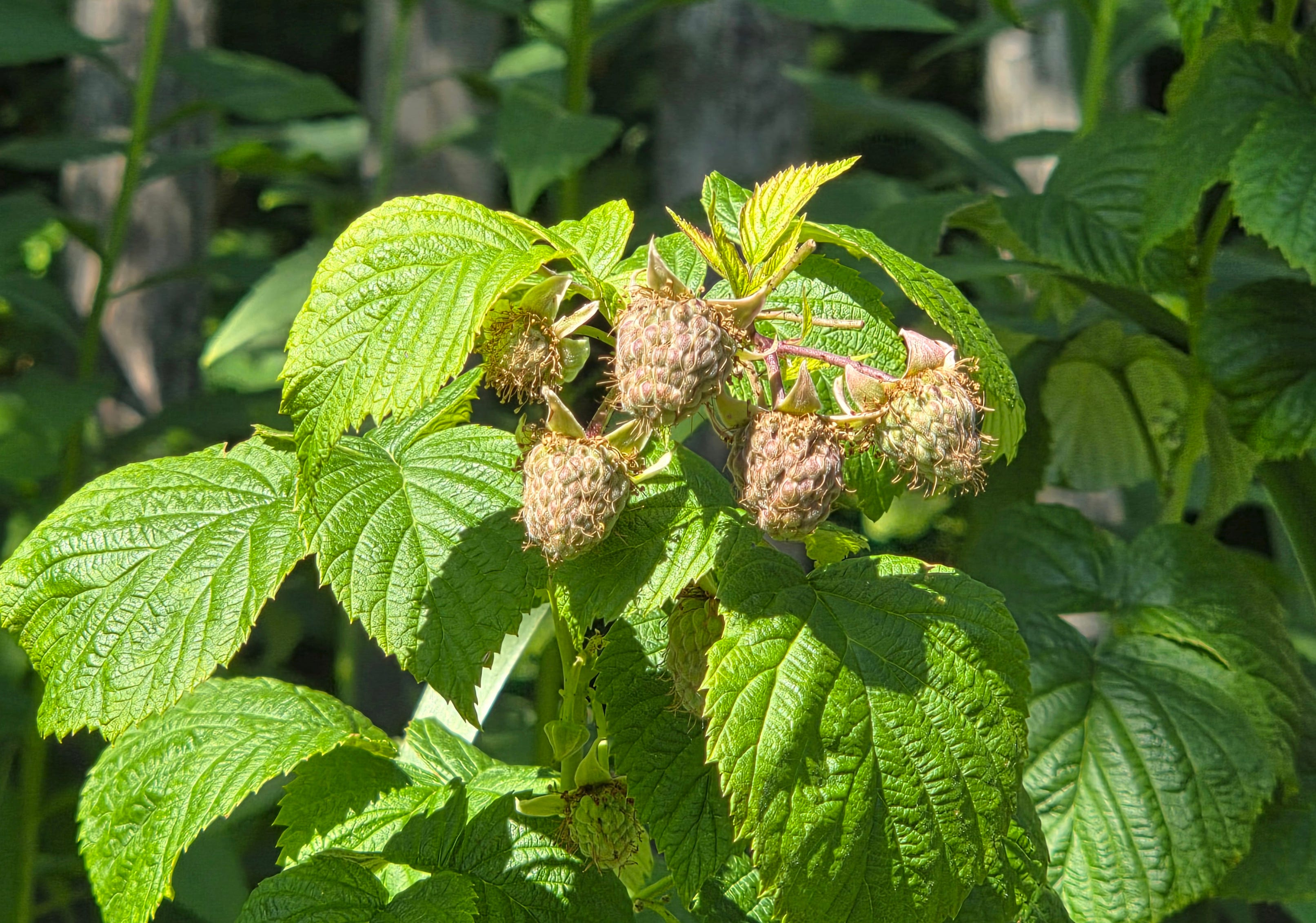
When I was recently asked to write a poem in the language closest to my heart, I wrote it in four. Neither of my parents’ dialects was one of them. Which maybe makes sense: Even in the village I grew up in, people could tell I wasn’t quite from there.
Along the journey through languages I met versions of myself: the German teenage literature enthusiast copycatting in her essays the respective old writer she just had read, the English speaker frustrated with limitations of personal expression (yet paradoxically small talky), the Vietnamese beginner de- and re-constructing worlds, and the Italian enchanting every grocery shopping tour.
Oh, and raspberries. Many of them.
Bavaria: Dialects I didn’t inherit
One of the four languages of this poem is High German. I grew up in Germany, in the state Bavaria, which is also where my mum was born and raised. My dad, on the other hand, comes from the state of Rhineland-Palatinate. These regions speak two very distinct dialects neither understandable to the other. So, at home we spoke High German and growing up I became most comfortable expressing myself in this language. I can understand Bavarian. The dialect from my dad’s village, however…let’s say I tried. I keep trying whenever I visit, which for me involves interviewing my uncle and structuring (in verb tables) this language that does not have a standard formal written form. In German - and its dialects - the twist is that the verb like “have” would change form for every pronoun. I have, you have, she has (in High German: ich habe, du hast, sie hat) turns into “ech hun, dou häscht, hat het”. Complete nonsense if you ask my sense for language and unfortunately no chance for me to include it in the poem.
London: Four raspberries & untranslatable images
When I moved to London I learned that for me, words don’t translate concepts, but images carry them. I remember meeting a newly made friend and telling her how frustrated I was with myself as I could only find similar words but not such with the exact same meaning in English. When I said raspberries I would see the bright red, perfectly formed, plastic-packed ones in an air conditioned supermarket. Yet, with Himbeeren (German for raspberries) I saw bushes and small, dark red to purple, sometimes dry raspberries in the sun - a picture from my mother’s garden. There’s joy in going looking for images I don’t usually notice. In Vietnamese, my youngest language, quả mâm xôi doesn’t summon any image yet, as I had to look it up just now; it was not needed in my Vietnamese conversation. In Italian, lampone, pulls up something almost embarrassingly unrelated: lemon and summer, while some German part of me keeps mishearing it as Lampion, a paper lantern glowing at a garden fence.
When my German friend visited London, I found traces of shared images. “They even eat toast untoasted!” she remarked in Tesco’s supermarket sandwich section, in shock over toast being treated like bread. While in German I would not even use Brot (direct translation of bread) for toast. In English, my imagination for bread has – generously and shockingly at the same time – expanded to include toast.
For me, words don't translate concepts, but images carry them.
What really struck me is when I discovered I found calling myself an artist much easier than Künstlerin. The difference is not semantic, but the English translation feels much more so like a permission slip. Artist feels like a role (any)one can try on. Künstlerin feels like a title to earn. I suspect my German art education has something to do with that… I’m not sure.
Germans ask whether you have tomatoes on your eyes. English speakers miss the forest for the trees. We do have a similar expression to the English one in German but I’ve never been asked the German one in English. I might use this to my advantage sometimes and steal images from one language when playing with another – but don’t call me out! ;)
Despite or just because of such frustration and nuance, English is the second language I wrote into this poem “in the language closest to my heart” and the only other one I dream in next to German. It’s been a wonky ride though!
Artist feels like a role (any)one can try on. Künstlerin feels like a title to earn.
London: Living in English
When I first moved to London, fresh out of German high school, I carried the expectation that the Brits would be exactly like the Germans. And that was the mistake. Their “How ya doing?” in passing stressed me out. How on earth was I supposed to tell you all about my mother’s work troubles, and how I had just bruised my right foot that very morning, all while walking, leaving a few second window until the talking in passing would have to turn into shouting across distance?
Unlike most of my fellow international students I had not received schooling in mostly English, and I could tell the Germanness of my education not only in my conversation style but also in the difference in how much your own critical voice mattered in German essays versus scholars’ opinions that I collected for my assignments in the UK. I remember reading the feedback on my first essay and wondering why the faculty didn’t seem interested in my thoughts and reason at all and instead were asking me to repeat what other, seemingly more important people had written.
At the same time, English created a vessel for different parts of me. I learned how to talk about sociological concepts. I also became acquainted with mannerism in corporate settings and most importantly became great at small talk. I tend to exaggerate in German already, but in English I constantly find myself making statements like “I’d never do that” and “I’d love to do this”.
Loving in English also gave me room to hide. An “I love you” comes much more easily over my lips than the German equivalent (which, silly as it sounds, I feel resistance even typing out here). In English, I don’t feel the emotional gravity I attach to the German translation – potentially also because ilys are thrown around like rain in the UK. Dating people who understand German made me realise the bandwidth that comes with language. It feels more raw in senses.
An "I love you" comes much more easily over my lips than the German equivalent.
And despite it all, despite this new part of me that had developed, I used to avoid “Denglish” (German-English) at all cost. Mum called my dad out as pretentious when he couldn’t think of the German equivalent in our German conversation. Hence, while speaking German, I used English less than my German friends that had not lived in English speaking environments. In hindsight, rather than appearing more skilled, it made conversation flow less naturally and it always kept at least one version of me at bay.
Berlin: Two tongues, one page
I was most confronted with this when back to living in Germany (Berlin this time) after four years abroad. I struggled to integrate the selves that seemed tied to English and German respectively – one more bubbly (and if you listened to my German part, more fake), the other still the school girl operating on words of Goethe and her German teacher. I was even scared to meet people I first spoke to in German in an English speaking setting. I hadn’t built the confidence and charisma the work and uni events in London had drilled into me.
Still, slowly, I started to allow myself to integrate the languages on the same page in my notes, and it felt like my identities converged into one persona. This confrontation has also allowed me to emancipate my vocab in German and it has made me fall back in love with the language – I write poems more regularly
in German again (now that I don’t sound like that Goethe copy cat anymore). And, most recently I just started allowing myself to mix languages in the same poem. Rather than closing off some parts of the poem for a wider audience, it reflects more truly who I am and how I think. A layer less to hide beneath. Writing this my ex-partner’s comment on my English comes to mind “your accent is perfect, yet you lack the vocab to be a native speaker”. A couple of years onward, Berlin helped loosen something for me and these days, “Künstlerin” sometimes just slips just fine.
A layer less to hide beneath.
Vietnam and Travels: Gendered moon & borrowed words
Studying Vietnamese has brought new appreciation for words and challenged my sense of language. A friend shared her observation with me that all genders seem strangely inverted in German compared to what would be true in the meanings assigned in Mandarin. I found the same to be true in Vietnamese. The moon, symbolically female in Vietnamese and Chinese culture, would be male in German, the opposite is true for the sun. Reading translations of Chinese poetry taught me poetry can either be enchanted by such differences that offer new perspectives to the reader or close itself off in meaning.
Before taking Vietnamese lessons, the formal ways of addressing someone in German seemed cumbersome to the ease of the universal “you” in English. Learning formal structures in Vietnamese changed my view. In German, formal address is a blunt tool: anyone older, or anyone you meet formally (even the cashier at the grocery store) will be addressed as “Sie” (not “Du”). In Vietnamese, this would open up a myriad of options depending on both of the speakers’ genders and the exact age difference. A lot of tiptoeing here! I appreciate formal pronouns as signs of respect more in other languages too.
When I first arrived in Berlin, straight from Vietnam, I was overjoyed to hear so much Vietnamese there and nearly found it strange they didn’t recognise me. Even though I clearly looked German, I wanted to say “I’ve seen those streets, loved the bonbon fruits, and learned about Vietnamese dynasties” hence we must have some common ground of understanding. I’ve gotten more used to this by now – and yet, while in Vietnam I craved potato salad every now and then and now that I’m in Germany I sometimes crave rice after a week without it. For my four languages poem, the vocabulary I took away from my Vietnamese lessons was enough to slip in a handful of Vietnamese words as a third language.
My Italian stanza in the poem got nearly erased by the same person who gave me the task to “write in the language closest to my heart”. Again in this writing, it gets the short end of the stick by being placed so late. Still, I don’t think I’ve ever said a word in Italian and not felt joy. I mean who wouldn’t with rigatoni, farfalle, pappardelle – and we are only talking types of pasta! Given my level of Italian, I may also just be too close to imitation rather than fully inhabiting this language (like German and English), but it does bring out more dramatic sides of me. I didn’t delete the Italian section in my poem, also because together with Vietnamese it brings so much rhythm into the poem that I was rather singing those stanzas when I first shared it aloud.
All language has been a reflection of who I was becoming and they carry the images that are my experience. As usual I try to perfect my languages (including my dad’s dialect), but my poetry taught me to let the languages coexist on the same page and form something new alike. Why poetry, and not painting, or dance, or Vietnamese verb tables? I’m coming to know why. More on this soon.
The full poem I keep circling back to in this piece:
Ich bin. Sprache.

Ich bin
Sprache, wie ich geh’
Und sprech’.
In Handgelenk, Sehne und Bogen
Dort fidelt das Ich.

I am
artist, interrogation and laissez-faire
My words flow in English
I wrap myself in shorter sounds.
In impression lies some wonder.
Here I am.
Bold lines on empty canvas.

Ich bin
Zungenbotanikerin,
Sprachpathologin,
Weltallbummel.
Im Deutschen hält das Wort
Gewicht und spricht mit
Sich. Die Schülerin
Kommt in mir raus.
Da saug ich alles auf und
Schreib’ dir in den Worten and’rer.
Hoffend, dass aus immerzu
Wird inn’re Ruh’.

Step, step, trip-le step.
Một, hai, ba - I’m a merchant and
The smell and force of cà phê sữa đá.
I dance the tones and fall into
The swing. Họa sĩ morphs into hoa sĩ
How effortlessly I move from artist to
flower doctor.
Step, step, trip-le step.

Sono
musicista, fuoco, suono
l’Italiano attira il mio
amante interiore
non parlo mai di
quelle stagioni del cuore
tutti questi che verranno
la lingua corre come acqua
vuol dire: Non puoi fermarmi.

So I am the sponge that sucks up
All that is. Or does it show my core
beneath?